
Elizabeth Lady Wilbraham (1632-1705) By John Fitzhugh Millar
The author was invited to present this paper (now amended) at an architectural conference sponsored by David Gladstone, held in 2007 at Wotton Hall, Buckinghamshire, a building designed by Wilbraham ca. 1700 – and in part of which former Prime Minister Tony Blair now lives.
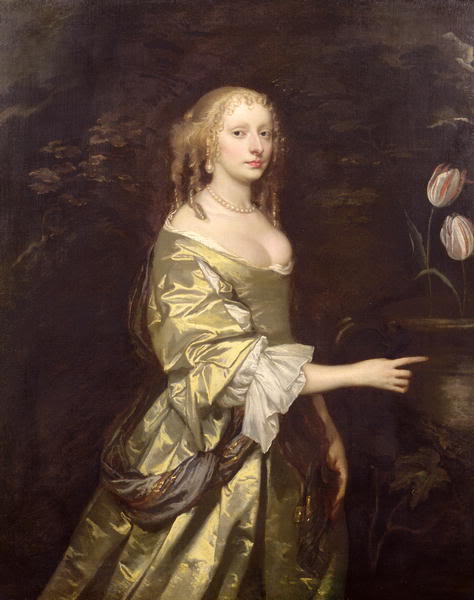
For the past century or so, historians have tried to maintain high standards of accuracy by requiring primary documentation throughout every book or paper. This is usually an admirable requirement, but if the documentation does not exist (whether it was destroyed by accident or on purpose), or if it never existed in the first place, the usual response has been to pretend that the people or events never happened. As a result, history is inevitably distorted. Art historians have made attempts to bridge that gap. For example, some of them can tell by intrinsic details, often to the approbation of their colleagues, that an anonymous, undocumented oil painting was actually by, say, Caravaggio. An example of this is Yale scholar Laurence Kanter, who is highly regarded for being able to distinguish paintings by Leonardo da Vinci versus his teacher Andrea del Verrocchio. I submit that there are occasions in which architectural historians can accomplish the like.
When I was 14 years old in 1959, I was attending Charterhouse School in Godalming, Surrey. For no apparent reason, I suddenly became passionately interested in the architecture of Sir Christopher Wren, and I quickly devoured every available book and article about the subject. It took only a short time before I found over 150 buildings in various books that any ordinary person would attribute to Wren – the right dates, the right style. When I discussed that list with experts, I was told that Wren did not design any of them, but no one knew who did. Nevertheless, I continued to add to the “Wren” list, and eventually found over 500 buildings I could attribute to the anonymous architect. A few years into the investigation, I encountered the late John Cornforth (1937-2004, renowned architectural historian; he told me to investigate further Elizabeth Mytton, Lady Thomas Wilbraham (1632-1705), as she apparently was much more active as an architect than anyone had previously suspected.
Wilbraham, thanks to her assertive mother and her step-father, retired Major-General Sir William Brereton, was exceptionally well educated. Her mother had two further daughters, one being Cecilia 4th Countess of Meath, who died young in childbirth. I am guessing that Elizabeth may have been impressed at about age seven by the idea of a woman in the arts when the famous Artemisia Gentileschi from Rome lived in London and painted portraits for Charles I’s Royal Collection. Elizabeth was sufficiently interested in architecture that at age 18 she went with the blessing of her stepfather to see Inigo Jones and his assistant, John Webb, to ask them to train her. They replied that since they believed that it was illegal in England for women to practice architecture, they did not want to be party to making her a criminal, which would by extension taint them as well. In fact, it turns out that there was no actual statute forbidding women to practice architecture, but most people believed that there was, which amounted to essentially the same thing. Therefore, she must have spent her entire career looking over her shoulder, frightened that the wrong person would find out about her architecture and that she would be punished, perhaps even by imprisonment. Incidentally, those “wrong” people did not include Charles II, who happily asked her to design three palaces and other lesser buildings for him. The quick-thinking girl asked Jones and Webb what they would do in her position, and they presumably replied that they would go to Amsterdam to study under Pieter Post, to Venice to study under Baldassare Longhena, and to Rome to study under GianLorenzo Bernini.
Wilbraham was married at age 19 in 1651 in a match arranged by her stepfather, and, at the recommendation Jones and Webb, she apparently talked her husband into an extended honeymoon in the Netherlands and Italy, where she spent much of her time studying architecture. In the Netherlands, her teacher was Pieter Post (1608-1669), who had returned from his exciting visit to Maurits-stad (Recife) in Dutch Brazil, where he designed the Governor’s Mansion, the first neo-Palladian building in the Americas, about 1637; Post must also have introduced her to the Vingboons brothers and Arent van s’Gravesande, other Dutch architects who were contemporaries of his. This was Amsterdam in the era of painters Rembrandt van Rijn, Frans Hals, Judith Leyster, Pieter de Hooch, and Johannes Vermeer, and composers Jacob van Eyck, Sir Constantijn Huygens, and Cornelis Padbrue. In Venice, her teacher was Baldassare Longhena (1598-1682) in the era of painter Antonio Zanchi and composer Francesco Cavalli. In Rome, her teacher was Gianlorenzo Bernini (1598-1680) in the era of composers Giacomo Carissimi and Gregorio Allegri, just before the birth of Arcangelo Corelli; Bernini showed her ancient Roman architecture, and Renaissance buildings, and his own period designs. While she was in Rome, she undoubtedly saw some of the outrageous architecture by Bernini’s contemporary, Francesco Borromini, but she fortunately steered clear of being influenced by it. On the way from Amsterdam to Venice, she stopped briefly at the Stadtresidenz at Landshut, Bavaria, where no other British architect of the day is known to have visited, and this building (designed and built in 1536 by three brothers from Mantua, before any of Palladio’s designs) was the unique inspiration for some of her most important buildings. She is likely to have spent two to three months with each of her teachers; luckily, she completed her studies with Pieter Post before the outbreak of the First Anglo-Dutch War, 1652-4. Fortunately, she managed to avoid becoming pregnant for the whole of the trip; her first daughter, also Elizabeth, was not born until 1653, followed closely by Mary and Grace. All three of the daughters were painted as teenagers by Sir John Michael Wright.
While she was in Amsterdam, Post would undoubtedly have shown Wilbraham the Beurs or Exchange on the Molenplein. This splendid arcaded building, designed in the 1570s by Italian-trained Hans Hendrik van Paesschen of Antwerp, but not built for another four decades, was perhaps more responsible than any other for teaching her to value classical arcaded loggias in her architecture. The building itself, built 1608-1611 under the supervision of Hendrick de Keyser and unfortunately destroyed in 1835 in the name of progress, was primarily responsible for the high prosperity and the resulting incredible art of the Netherlands’ Golden Age. Authorities in Amsterdam would be well advised to reconstruct the building on the open space of the Dam (even if not exactly on the original site) in order to give residents and tourists alike a better sense of importance of the period to the country’s – and the world’s history. Hans Hendrik van Paesschen had also provided the designs for London’s 1566 similar Royal Exchange for economist Sir Thomas Gresham and his deputy Sir Richard Clough, and when that burned down in the Great Fire of London in 1666, Wilbraham was ready to design its larger replacement in a similar style. Wilbraham’s 1669 Royal Exchange lasted until it too was destroyed by fire in 1838. The replacement, in a related style but three stories tall by William Tite, was opened in 1844 and still stands.
Wilbraham’s familiarity with Palladio’s work also presumably dates from the time of the honeymoon trip. She later purchased the 1663 Godfrey Richards English edition of Palladio’s I Quattro Libri (volume I), a book that she annotated heavily over the years, and only one of several architectural books she is said to have owned. She probably owned Serlio’s five volumes (out of a total of seven) that were published in London in 1611, and Rubens’ book about the architecture of Genoa, published at Antwerp in 1622; Rubens had died eleven years before Wilbraham’s visit to the Netherlands. On her way home from Italy, it is possible that she stopped briefly in Genoa, where she would have seen some of the house designs there (documented by Rubens in his 1622 book), later reflected in several of her house designs in England. Incidentally, she informed Webb that she had completed her Continental training, and she planned to ask him to supervise construction of some of the buildings that she expected to design, because of course she could not be seen to supervise construction; the first of these was Lamport Hall. With the exception of two ca. 1660 buildings by Louis LeVau (the Chateau of Vaux-le-Vicomte near Paris and the dome of the College des Quatre Nations in Paris), which are reflected in some of her designs, she was clearly not influenced by French architecture; the influence of the LeVau buildings was either the result of correspondence with LeVau, or of her escorting Wren to Paris in August 1665 in order to introduce him to Bernini. LeVau, incidentally, was hired in 1660 to rework Bretby Hall in Derbyshire (where Wilbraham later designed the chapel), along with LeVau’s colleague Andre LeNotre to landscape the grounds.
Bernini impressed upon his student that it was important to study many architectural styles from past ages, because if you are asked to repair or alter an old building you will need to know how it was initially assembled; this skill led to at least three very fine gothic buildings by Wilbraham, in one of which (the church of Saint Mary Aldermary, London) she inserted spectacular fan-vaulted ceilings of her design, executed in plaster rather than the more traditional but expensive carved stone.
The whole array of buildings attributed to this mystery architect shows a strong familiarity with both Italian and Dutch (but mostly not French) architecture. The most obviously Italian buildings date from between 1652 and 1665 – the south front of Syon House in greater London, with its 11-bay Italian loggia, ca.1652; Syndale House, Kent, 1652 (demolished); Walford Park House, Newbury; the giant 25-bay Denham Place I, 1654 (demolished); Lamport Hall, Northamptonshire, 1655; Chesterton Hall, Warwickshire, c.1655 (demolished); Lees Court, Kent, c.1656 (altered); Coleshill, Berkshire, probably 1650s (demolished); 155 High Street, Guildford, 1659 (with split pilasters invented by Longhena); part of Malling Deanery, Sussex, c.1660 (altered); the Queen’s Gallery at Somerset House, London, 1662 (demolished); the rebuilding of Althorp, Northamptonshire, c.1665, based on a little known design by Palladio (greatly altered in the mean time); Nottingham Castle, probably 1660s; the 15-bay Marketplace Terrace at Northampton, c.1670 (nearly all demolished); the pilastered elevation of Badminton; and the arcaded courtyard at Holyroodhouse Palace, Edinburgh, begun 1671. In the Dutch style were Fishmongers Hall in London; Staunton Harold Hall on the Leicestershire-Derbyshire border; Belton in Lincolnshire (1684); Denham Place II (1689); Tredegar House in Wales (ca.1664); Burley-on-the-Hill, Rutland (1690s); Bourne Park, Kent (1702); Winslow Hall, Buckinghamshire (1701); Linlithgow Burgh Hall in West Lothian (1670); the Exchange/Custom House, King’s Lynn (1684); and the Assembly Rooms at Epsom, Surrey (1692), built for English Country Dancing.
Other Italian-style buildings include several basilical churches with two rows of giant-order columns along the nave, and some centrally-planned churches; in fact, Wren, who was often too busy, had Wilbraham design almost half of his 52 London churches, including the gothic St. Mary Aldermary with its spectacular fan-vault ceiling (inspired by the 1630s ceiling at Oxford’s Convocation House), St. Mary Aldermanbury (now re-erected in Missouri), St. Mary-le-Bow (but without its steeple), St. Bride’s Fleet Street (but without its steeple), St. Peter’s Cornhill, and St. Anne & St. Agnes. Other Italian-style Wilbraham churches include St. Mary’s, Ingestre, Staffordshire, and St. Thomas’, Bombay/Mumbai (now enlarged and altered as the cathedral) Triumphal arches are another Italian feature: she designed most of the arches for Charles II’s coronation procession; additional arches that still stand are the entrances to St. Bartholomew’s Hospital, and to Kilkenny Castle in Ireland. However, these are outside the scope of this paper, and the Naval Arch in Portsmouth.
I should also mention in this category the Guildhall/Market at Windsor designed by Wilbraham. It suffered many serious alterations over the years, including its roof form – it was once a deck-on-hip, and is now a simple gable. This was a multi-purpose building, where the town council could meet, where the court could hold sessions, and where English Country Dance Assemblies could be scheduled. Prince Charles was married there in 2005. After the death of the master-builder, Sir Thomas Fitch, the city fathers dragged in Windsor-born Wren to finish the building, even though he protested that the workmen were perfectly capable of executing the very competent plans. The officials then ordered him to build two rows of columns in the middle to support the upstairs room, which Wren insisted it did not need because he had great faith in the [un-named] architect. Wren solved the problem by building the columns and leaving a gap of almost two inches (5 centimetres) between the tops of the columns and the ceiling, a joke not discovered for over a century when painters noticed it. The cost of the additional columns meant that the proposed cupola had to be abandoned, which rather spoils the overall view of the building.
Most of the Dutch-style buildings share idiosyncratic details and features with the Italian-style buildings. This paper has to be too short to provide an analysis of those details, but some will be mentioned here. First, many of these buildings have flat or flattish roofs, which was otherwise rare in this period, but reflected the prodigious production of English lead and copper mines. Second, many of them have central breakfronts in the Dutch style, crowned with a pediment when a roof was visible, and no pediment, usually when the roof was flat; these breakfronts were a single bay wide (the biggest example being the addition to Elizabethan Worksop Manor), occasionally 2 or even 4 bays wide, and often 3 or 5 bays wide. Jones is known to have designed only one such breakfront, and Wren possibly only a handful. The mystery architect frequently employed scrolled ogee (swan-necked) pediments, normally on volute brackets (consoles) over doorways, or occasionally on mantels; this is a form that existed in Italy, but does not really show up in Britain until the 1650s. Other triangular and segmental pediments by this architect almost invariably sat on volute brackets, not on columns or pilasters. This architect designed cupolas with volutes at the angles, a legacy of Longhena, (as at Stow House, Cornwall, now destroyed; Coleshill in Berkshire, destroyed; Eaton Hall in Cheshire, also destroyed; and Belton) and decorated some upstairs central windows with volutes and other frippery (as at Hanbury Hall, Worcestershire, Uppark in Sussex, and the dependencies at Wotton). Some of these buildings had single-bay breakfronts at each end of the front, as Stowe, Buckinghamshire and Shobdon Court, Herefordshire used to be. Occasionally, this architect fitted giant arched windows into roofs, as at Melton Constable, Norfolk, and a number of churches (including Saint Sepulchre’s, Holborn and “Wren’s” Saint Mary Aldermanbury). This architect seems to have been particularly fond of circular and oval windows. More than thirty of the mystery architect’s country houses had elaborately carved Dutch-style foliage balustrades on the staircases (and on altar rails in chapels), of which perhaps the best known was at Cassiobury Park, Hertfordshire (now at the Metropolitan Museum, New York); another is at Kinross House, Scotland, and another from Eyrecourt, Ireland is now at the Detroit Institute of Arts; still another is at 155 High Street, Guildford, and another is at the Greystone Museum at Beverly Hills, California; the earliest of these balustrades is from the 1650s and the last is from 1704, and none are known from outside Wilbraham’s career. The architect seems to have enjoyed placing niches – circular, oval and compass-headed – in a row, either on the outsides of buildings (as at Honington Hall, Warwickshire, and Euston Hall, Suffolk) or on the inside, as at Coleshill. Finally, this architect seems to have introduced the sash window to England, starting with what I call the “guillotine” sash (iron-framed leaded glass), first found at the Queen’s Gallery at Somerset House (1662), and a short time later at Ham House, Surrey; Hutton-in-the-Forest, Cumberland; and the Temple Bar, London. This architect was also responsible for introducing wooden sash, the first being at Moor Park, Hertfordshire in 1678 for Charles II’s illegitimate son, the Duke of Monmouth. Nobody knows when or where the world’s first sash window was invented, but if it was not Wilbraham, at least she was responsible for introducing them to Britain.
Elizabeth Wilbraham is known to have designed a number of prominent buildings for herself and members of her family. In Staffordshire stands her own house, Weston Park, which had three completely different elevations on the principal sides (now unfortunately much altered). Next door, is her rebuilding of the mediaeval Saint Andrew’s Church, Weston, decorated with Tuscan pilasters unusually accompanied by pulvinated friezes. Not far away was her rebuilding of Fisherwick Park for her family (now demolished). She designed Halston Hall over the border in Shropshire for family; it once had a flat roof and no pediment over the breakfront. Further north in Cheshire, she designed a very fine Dutch-style house for herself, Woodhey, known from several period images, including circular basement windows, but all that survives of it is a real gem of a chapel, often described as a perfect “Wren” design. Also in Cheshire, she designed Dutch-style Eaton Hall for family, with splendid Italian garden temples (now demolished). In Wales, she designed an arcaded wing at Chirk Castle in Wales, of which the paneled upstairs gallery survives with door-cases surmounted by scrolled ogee pediments; the work at Chirk is the only architecture for which documentation specifically connects it with Wilbraham. Her own London house, in the village of Knightsbridge close to where Harrods now is, was destroyed, but a close copy of it was built in 1904 near the Houses of Parliament. A close friend and neighbor of Sir Thomas Wilbraham at Weston was Walter Chetwynde, and it is highly likely that she designed the delightful church of Saint Mary’s, Ingestre for him. The designs of these few family buildings are closely related in general and in particular to the roughly 450 buildings attributed to the mystery architect.
Even though England had lived through the reigns of two queens in the previous century (Mary Tudor, who reigned 1553-1558, is generally thought of as a disaster, but her half-sister Elizabeth, who reigned 1558-1603, was viewed in her own time as well as by posterity as one of the greatest English monarchs of all time), the role of women in the reign of James I and immediately thereafter was extremely limited. Apparently, no actual statutes prevented women from joining the professions, except that most professions required graduation from a college, and no English college at that time would admit women. With the exception of being a surgeon (and a surgeon was not then regarded as a professional, whereas a physician was a professional; in any case, only one seventeenth-century woman is known to have been trained as a surgeon, Hannah Woolley, 1622-ca. 1684, and she actually entered a different career after all) women were thus barred from almost all the professions, with serious penalties and punishments for any woman caught breaking the rules. It turns out that there was no statute barring the practice of architecture for women, but Inigo Jones and John Webb declined to teach her architecture, because, not being familiar with the actual law, they assumed that it was illegal for women to be architects, and they were afraid that if she were arrested they might also be subject to arrest for having taught her. Elizabeth Lady Wilbraham, had she been a man, would probably have been more famous as an architect than even Wren, but, thanks to the apprehension of Inigo Jones and John Webb, she felt that she was in danger of being sent to prison for her architecture if the wrong people had found out about it, and so she left behind as little documentation as possible.
Yet, Wilbraham was not the only serious competent English woman pioneer of her day. She was mostly contemporary with Ann Strugnell Wyatt (1658-1757), who designed and supervised construction of battleships for the Royal Navy, including the 80-gun Cumberland in 1695, and major naval chandler Constance Wise Pley (b. ca. 1615). English portrait painters Joan Palmer Carlile (1600-1679) and Mary Cradock Beale (1632-1699) painted pictures that are much sought after today; Dutch portrait painter Judith Leyster (1609-1660) painted pictures that were long thought to have been the work of Frans Hals, and she was joined by Sara van Baalbergen (1607 – after 1638), Maria van Oosterwijck (1630-1693), and Rachel Ruysch (1664-1750); Italian portrait painter Artemisia Gentileschi (1593-1653), lived and worked with her famous father in London in the late 1630s, sold more than one of her splendid paintings to Charles I, and was still active in Naples while Wilbraham was in Rome. Michaelina Wautier/Woutiers (1617-1689) of Brussels was a fine painter, as were Elisabeth-Sophie Cheron Le Hay (1648-1711) and Catherine Duchemin Girardon (1630-1698), both of Paris. Susanna Lister (1670-1738) and her sister Anna/Nancy Lister (1671-1700) published high-quality copper engravings of natural history subjects. Music composer Mary Harvey Lady Dering (1629-1705) wrote high-quality chamber music that was immediately published by the likes of Henry Lawes and John Playford. Other female composers of the period included Barbara Strozzi (1619-1677) of Venice and Padua, Antonia Padoani Bembo (ca.1640-ca. 1720) of Venice and Paris, and Elisabeth Jacquet de la Guerre (1665-1729) of Paris. Aphra Johnson Behn (1640-1689) professionally wrote plays for the theatre, as well as poetry and published essays; Dutch poet, painter, and engraver Anna Roemers Visscher (1584-1651) died at age 67 when Wilbraham was studying in Amsterdam: did they ever meet? Silversmith Alice Sheene (fl. 1690-1705) seamlessly continued her late husband’s trade; furniture-maker Elizabeth David Gumley (1674-1751) continued her late husband’s trade. Sarah Dalrymple (fl. 1714) was a furniture-maker in Edinburgh, specializing in Japan-work. Professional sculptor W[inifred] Mrs. Thomas Goldsmith (fl. 1700) made the statues of King William and Queen Mary still on display at Westminster Abbey, and a bust of James II, among others. Following the Royal Warrant of 21 August 1661, women were permitted to act professionally on the public stage, so Mary Saunderson Betterton (1637-1712), Anne Marshall Quinn (ca. 1640-1682), and Hester Davenport Hoet (1642-1717) were only the first of many professional women actors; they were followed by Nell Gwynn (1650-1687), Elizabeth Barry (1658-1713), Susanna Mountfort (1667-1703), and others. The somewhat scandalous physicist Margaret Lucas Cavendish, Duchess of Newcastle (1623-1673) was even invited to attend meetings of the otherwise strictly male Royal Society, where she was quite able to hold her own in the scientific, mathematical, and philosophical discussions. Dorothy Lady Pakington (1623-1679) and Anne Finch Viscountess Conway (1631-1679), a close friend of Henry More at Cambridge, were respected philosophical writers; Elizabeth Elstob (1683-1756), as long as her brother was alive, was a leading scholar of Anglo-Saxon literature at Oxford University; entomologists Eleanor Poyntz Lady Glanville (1654-1709) and the Dutch/German Maria Sibylla Merian (1647-1717) were highly respected in their field. Bathsua Reginald Makin (1600-ca. 1675) was a proto-feminist writer, who paved the way for the first feminist writer, Mary Astell (1666-1731); Astell even talked Queen Anne into putting up a huge sum of money to build and endow a college exclusively for women, but Anglican clergy blocked the college, on the grounds that it would too closely resemble a Roman Catholic convent! Although it was not in England, the first woman to graduate from college was in this period: Italian scholar Elena Lucrezia Cornaro Piscopia (1646-1684), fluent in seven languages, received her philosophy degree from the University of Padua in 1678; the English speaking world had to wait until the mid-eighteenth century for a college to be established that admitted women – in Pennsylvania. Elizabeth Cellier (1642-1717), an assertive Roman Catholic midwife, promulgated a scheme to establish an English college of midwifery, which would have had royal funding from James II if he had not been dismissed from the English throne in 1688. Numerous female poets abounded, including Katherine Fowler Philips (1631-1668), Dryden’s friend Anne Killigrew (1660-1685), and Anne Kingsmill Finch Countess of Winchilsea (1661-1720). Mary Fisher Bayley Crosse (ca. 1623-1698) was a Quaker missionary, who was whipped and imprisoned for her activism numerous times in England and America, but in 1658 she embarked on a successful solo exploration trip around parts of the Turkish Empire.
At the other end of the scale, when girls of about twelve or fourteen years of age found themselves orphaned with no resources (which was a frequent occurrence), they often pretended to be boys and enlisted in the Royal Navy. If their ship remained in northern waters, they would need to wear multiple layers of clothing in order to stay warm, so nobody would be likely to suspect what was hiding under all those layers. In tropical waters, of course, they were more likely to be discovered. But, even when they were discovered, they had to be paid in full for their time of service before being dismissed from the navy. Record keeping was so poor that many young women succeeded in re-enlisting on another ship in another port. Some experts estimate that about one percent of all enlisted people serving in the Royal Navy were actually women in disguise. At least one woman apparently served a distinguished career as an officer before retiring as a captain; a popular folk song was written to tell her story, although conveniently omitting her name. The possibly fictional Charlotte de Berry (1636-1660s) is said to have been a skilled English merchant-ship captain and notorious pirate while disguised as a man, but two French women of the period definitely were successful pirates: Anne Dieu-le-Veut (1661-1710), and Jacquotte Delahaye (ca. 1630-ca. 1670). The Polish cavalry General Casimir Pulaski, with his legendary moustache, serving in the American army during the War for Independence, was killed in battle near Savannah in 1779; in 2019, forensic experts found that Pulaski’s remains include an unmistakable woman’s pelvis – how many other officers in the period were actually women in disguise?
Architects do essentially two things. They design buildings, and they supervise the construction of buildings, although not necessarily the same person does both things. In the cases of the buildings known to have been designed by Wilbraham, she drew the elevations, the plans, the sections, and the details (such as staircases and mantels), but she did not supervise construction. Captain William Winde is said to have supervised construction at Chirk, and William Samwell is reported to have supervised construction at Eaton. I believe, although I cannot prove it of course, that Wilbraham designed all or nearly all the buildings on my long list, but she had many other people supervise construction for her. Since she was wealthy, she did not require payment for her designs, and any payments made therefore went to the supervisors, hence no documentation of her involvement. Women were socially not allowed to be architects in those days (rather like would-be women architects in Saudi Arabia today), so she could not have accepted payment for the designs in any case. Some of the construction supervisors included builders like the Smith brothers, the Fitch brothers, the Hurlbutt brothers, Henry Dormer, Robert Grumbold, Edward Jerman, John Lumley, Peter Mills, Sir William Ogbourne, John Olley, Edward Stanton, John Stone, William Taylor, Robert Trollope, and Thomas Webb; some were primarily sculptors, like Edward Pierce and Sir William Wilson; some were best described as architectural expeditors, including Henry Bell, Hugh May, Sir Roger Pratt, the Earl of Ranelagh, occasionally the architect John Webb, William Samwell, and Captain William Winde, as well as Scottish “architects” Sir William Bruce and James Smith. I contend that many of these people, even though credited with the designs of numerous buildings, never actually designed any buildings at all, but merely received credit for designs they constructed for Wilbraham. Those who did design buildings independently of Wilbraham designed buildings that are obviously different in style from what she designed and often vastly inferior (examples: Hugh May’s works at Windsor Castle, and William Taylor’s Holy Trinity Church, Minsterley, Shropshire and Halswell House in Somerset, and Pratt’s design for his own house). Obviously, architects who both designed and supervised construction either had to employ a team of people or managed to design very few buildings in the span of a life. Wilbraham, who did not supervise construction, had plenty of time to design about 500 buildings, which works out to fewer than ten per year from 1652 to 1705. The down side of not supervising construction is that some buildings were left unfinished, and others were altered during construction by lesser hands.
It is not directly related to this paper, but I should mention another observation about Wilbraham’s architectural career. She got into architecture at age 18, whereas Wren, an accomplished mathematician, astronomer and scientist, did not turn to architecture until he was in his thirties; his interest in architecture was perhaps as a result of his having lived for a time at Hans Hendrik van Paesschen’s splendid Gresham College in London, and close to Hendrik’s Royal Exchange for many years. I contend that Wren turned to Wilbraham to be his architectural tutor, and that he often passed commissions along to her when he was too busy (including no fewer than 25 of his London churches, in which I can find numerous details that correlate to Wilbraham’s other buildings). When Wren travelled to Paris in August 1665 to meet Bernini, it was at Wilbraham’s introduction. Wilbraham also taught other people architecture, including Dean Henry Aldrich of Oxford. It appears that Wilbraham also had a hand in training Wren’s famous assistant, Nicholas Hawksmoor.
Even Wren’s first two designs, Pembroke College Chapel at Cambridge and Sheldonian Theatre, Oxford (the latter being in part a much smaller version of the Teatro Marcello of 17BC in Rome that she was shown by Bernini; Wren even wrote of that specific connection), now appear to be largely by Wilbraham with but a few little details left for her student Wren to draw. Wilbraham designed many important buildings at Oxford and Cambridge, presumably often referred to her through Wren. One such referral was for the College of William & Mary in Virginia in 1693. Her first design for that was arranged around an octagonal, arcaded courtyard with three domes; the larger dome was over the main lecture hall, and the smaller two were over the chapel and a smaller lecture hall. The plan was liked so much that a picture of it remains the shield of the College today, but the local Virginia builders complained that it was too difficult to build on the frontier, so Wren asked her to design a simpler college building, which still stands today in slightly altered form, known as the “Wren Building.” By coincidence, another of her students may have been Francis Nicholson, who served as Governor of Virginia and other colonies, and supervised the rebuilding of the “Wren Building” after a fire in 1705.
So far, I have come across about two dozen architectural drawings that I believe are in Wilbraham’s hand, and I am aware of five wooden architectural models, made presumably at her direction.
Some in the audience may find some or all of this rather hard to take. “We’ve never heard any of this before,” they may say; “What utter rubbish!” All I can say is that it took me decades to come around to this point of view, based on very extensive research and a great deal of thought. I have also been encouraged in this line by well-known experts, who unfortunately are not here to say so, one of them being the late Giles Worsley. I have completed drawing nearly all the illustrations and have started on the text for a book on the subject, to be called First Woman Architect: Elizabeth, Lady Thomas Wilbraham (1632-1705), which I hope will be finished soon.